Saucony · 14 shoes · 8.5 avg score
Best Saucony running shoes
All 14 Saucony running shoes tracked on SolePicks, ranked by consensus score from independent expert and user reviews.
Saucony at a glance
Saucony has built running shoes since 1898, making it one of the oldest brands in the category. The lineup spans daily trainers, super shoes, and trail — with Endorphin, Triumph, and Kinvara as flagship lines.
Read our methodology →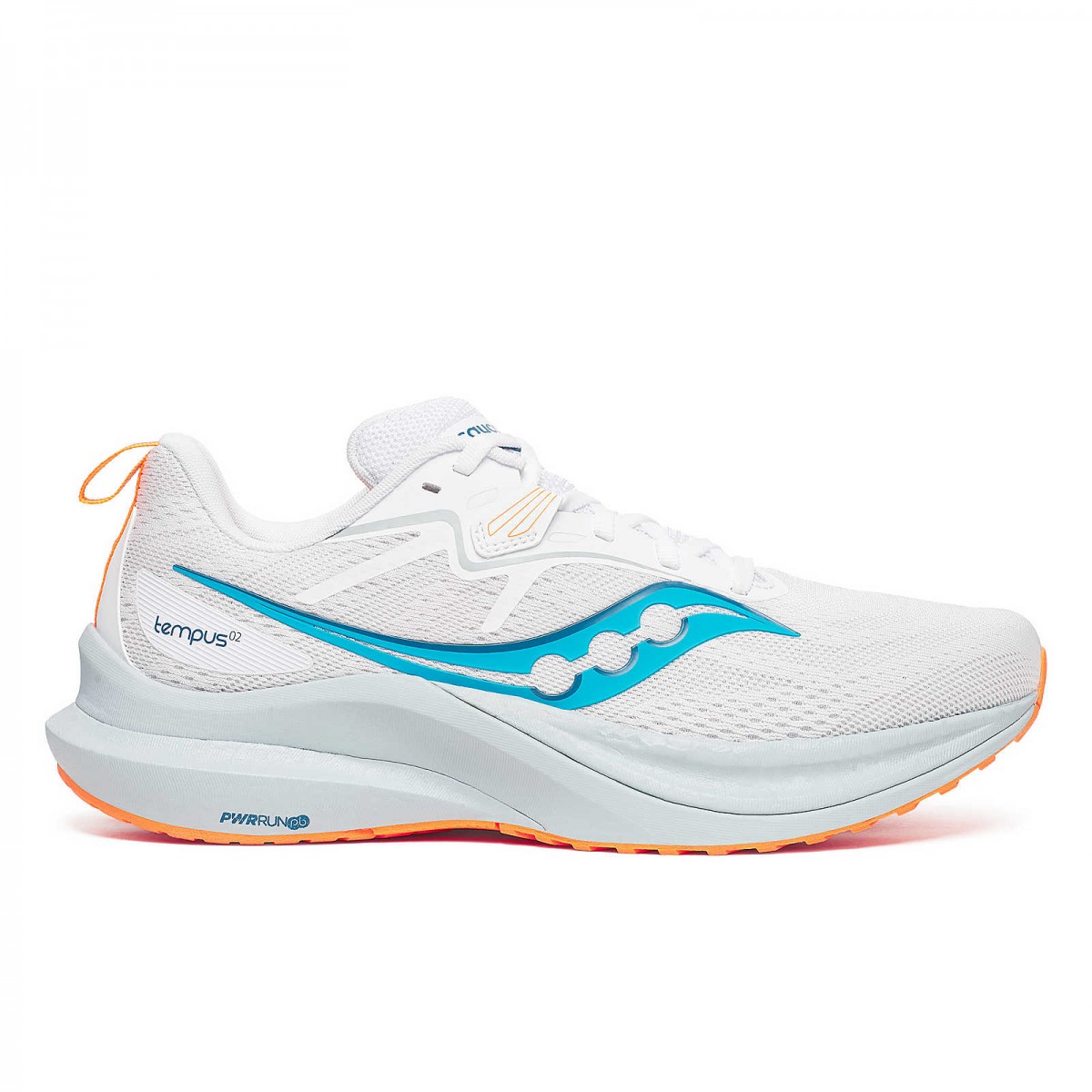
Saucony Tempus 2
The Saucony Tempus 2 is a moderate-cushion road running shoe designed for stability, featuring an 8mm heel drop and a stack height of 38mm in the heel. It utilizes PWRRUN PB foam for a lively feel, especially at faster paces, while the firmer PWRRUN frame adds durability and support. However, the shoe has a narrow fit that may not accommodate wider feet, and some runners report a longer break-in period before the midsole softens. While it performs well in cold conditions, the breathability is limited, and its weight is slightly heavier than some competitors in the category. Overall, it suits runners looking for a stable, responsive option for daily training or moderate distances, but may not appeal to those preferring a softer ride or a more spacious fit.

Saucony Endorphin Pro 4
The Saucony Endorphin Pro 4 offers a balanced cushioned ride, making it suitable for a range of distances from 5K to marathons. With a stack height of 39mm in the heel and a carbon plate, it provides a stable platform that is particularly beneficial for heel strikers. Reviewers note the wider toe box, which accommodates various foot shapes and reduces the risk of black toenails. However, some users find the shoe heavier than competitors, and durability concerns have been raised regarding the upper materials, which may break down before 300 miles. Additionally, the ride can feel firm at slower paces, and the shoe may not deliver the same level of responsiveness as top-tier racing shoes from other brands.
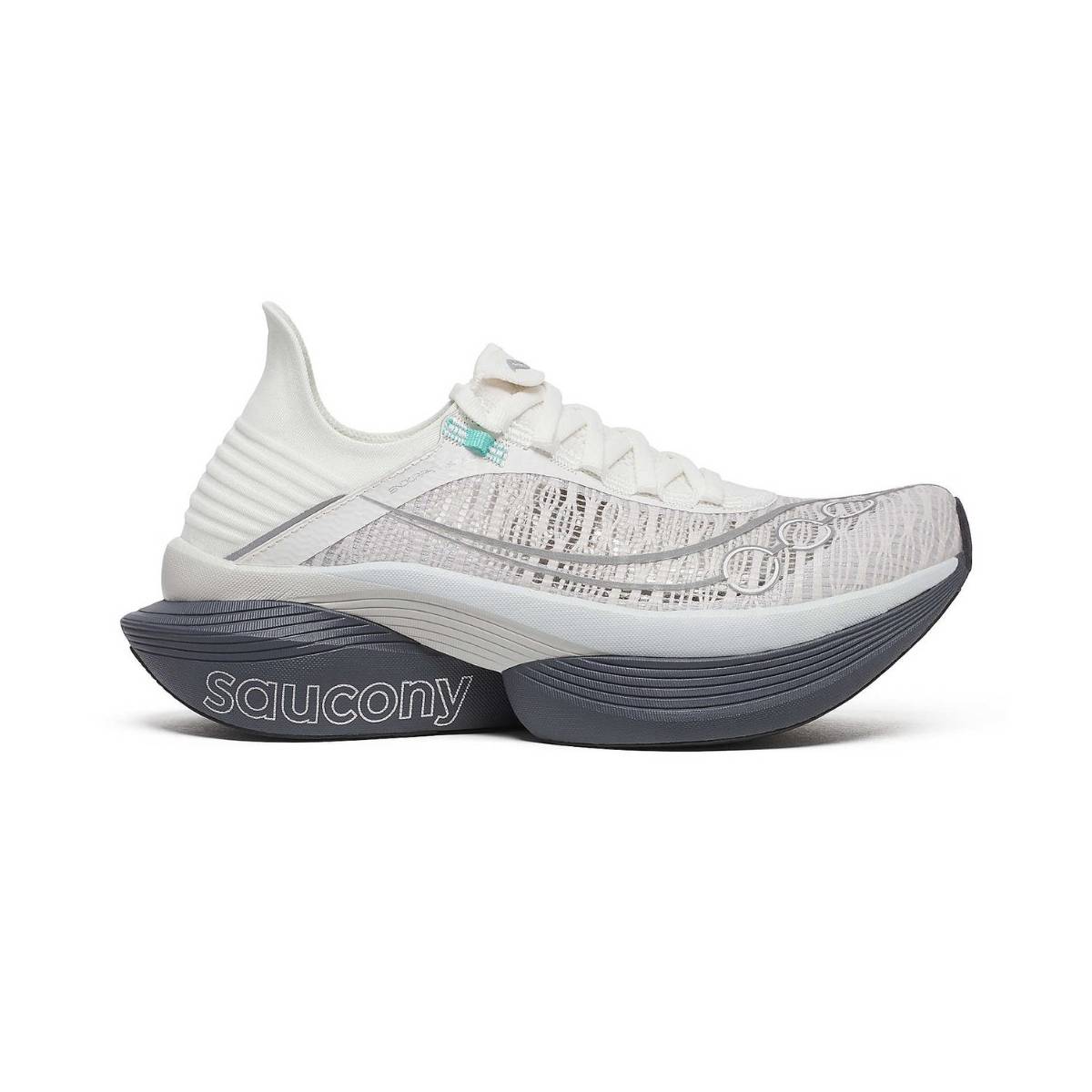
Saucony Endorphin Elite
The Saucony Endorphin Elite is a high-performance road running shoe designed primarily for midfoot and forefoot strikers. It features PWRRUN HG foam that provides a firm yet propulsive feel, particularly noticeable at faster paces. The shoe's aggressive toe-spring geometry aids in a forward launch, making it suitable for racing and speed work. However, the fit is narrow, and it runs about a half size large, which may require sizing adjustments. Reviewers have noted concerns about the outsole's durability, with wear occurring around 250 miles, and the energy return is less impressive compared to competitors in the same category. While it excels in speed and comfort for longer distances, it may not be the best choice for slower paces or easy runs due to its uncompromising ride.

Saucony Peregrine 15
The Saucony Peregrine 15 is a technical trail running shoe that offers a moderate level of cushioning with a 4mm heel drop, making it suitable for midfoot and forefoot strikers. Reviewers note that the newly blended PWRRUN foam provides a softer feel compared to its predecessor, enhancing comfort over varied terrain. The shoe features a well-designed outsole with 5mm chevron lugs that deliver excellent traction on mud and rocky surfaces. However, the narrow fit may not accommodate wider feet, and the stack height limits cushioning for longer ultra-distance runs. While it excels in grip and stability, some runners may find the ride firm on hard-packed trails and the outsole wears faster than alternatives on abrasive surfaces.

Saucony Peregrine 14
The Saucony Peregrine 14 is a moderate-cushion all-terrain trail running shoe that offers a balanced ride with a 4mm heel drop and a stack height of 28/24mm. It features a PWRRUN midsole that provides decent shock absorption, with 115 SA at the heel and 97 SA at the forefoot, making it feel firm underfoot at slower paces. While it delivers good grip and a bouncy ride on trails, it may not be the best choice for ultra-distance training due to its lower stack height and limited energy return. The fit is standard, with a roomy toe box but a slightly narrow midfoot, which may not suit wider feet. Subtle updates enhance comfort and durability, but the overall ride remains consistent with its predecessor, making it less appealing for those seeking a significant upgrade.

Saucony Hurricane 25
The Saucony Hurricane 25 is a max-cushioned road running shoe weighing 283g, offering a 6mm heel drop and a stack height of 38/32mm. It provides excellent shock absorption and stability, making it suitable for both neutral and overpronating runners. The refined PWRRUN PB foam enhances energy return, while the wide platform ensures support over long distances. However, the shoe's weight can be noticeable during faster runs, and the upper may lack breathability in warmer conditions. While it excels in comfort for long runs, its heavier build and price point may deter those seeking a more agile option for tempo workouts.

Saucony Kinvara 16
The Saucony Kinvara 16 offers a moderate stack height of 28mm with a 4mm heel drop, providing a firm feel underfoot, especially at slower paces. The updated upper is both sleek and breathable, while the revised PWRRUN midsole delivers a lighter, more responsive experience for tempo runs. However, energy return is somewhat disappointing, particularly for performance-focused runners, and the shoe's increased stiffness may detract from the agility traditional Kinvara fans expect. The narrow fit may not accommodate wider feet, and the outsole's minimal rubber coverage could lead to durability issues on daily runs. Overall, it strikes a balance between comfort and performance but comes with tradeoffs in energy return and fit.
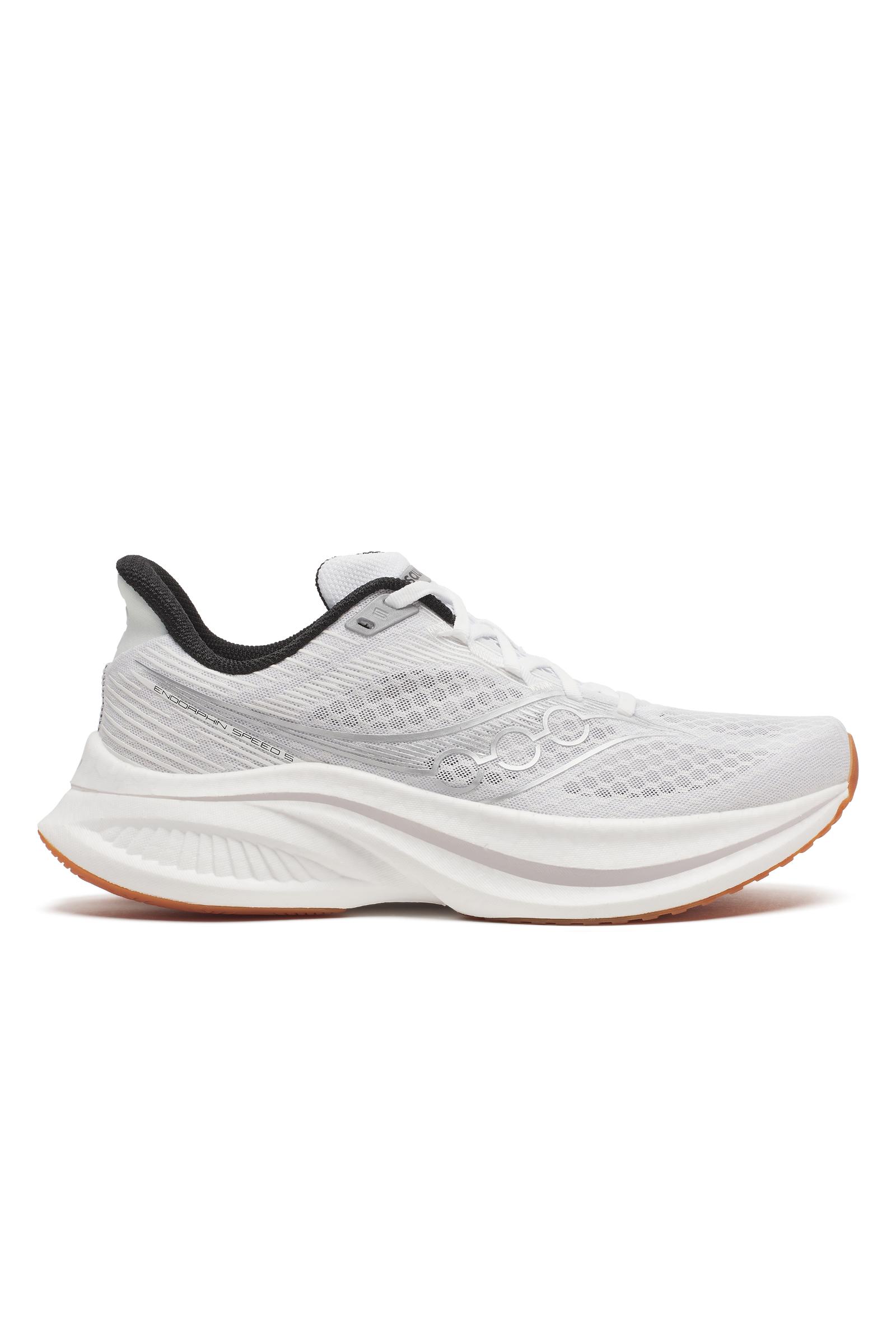
Saucony Endorphin Speed 5
The Saucony Endorphin Speed 5 offers a moderate level of cushioning and a standard fit, making it suitable for a variety of training sessions, from easy runs to tempo workouts. The PWRRUN PB foam provides a noticeable energy return, particularly at faster paces, contributing to a responsive feel. However, the shoe has gained weight compared to previous versions, now at 241g, which may affect its performance as a speed trainer. Reviewers noted that while the upper is breathable and the toebox is wider for comfort, the outsole durability is a concern, particularly with exposed foam that wears quickly. The modified nylon plate reduces stiffness, which may lead to a less snappy feel than its predecessor, making it feel more like a daily trainer than a dedicated racing shoe.

Saucony Endorphin Elite 2
The Saucony Endorphin Elite 2 features a max cushion stack with a soft IncrediRUN foam that provides a plush feel, particularly beneficial for midfoot and forefoot strikers. Weighing in at 199g, it remains lightweight for a racing shoe, facilitating a bouncy ride at faster paces. However, the shoe's softness can create a wobbly platform, making it less stable for heel strikers and those with less-than-perfect form. The narrower fit may also lead to discomfort for wider feet, especially due to the tapered toe box. While the improved upper offers better heel lockdown than its predecessor, some testers noted a lack of aggressive forefoot rocker and slower transitions, which could impact performance during longer races.
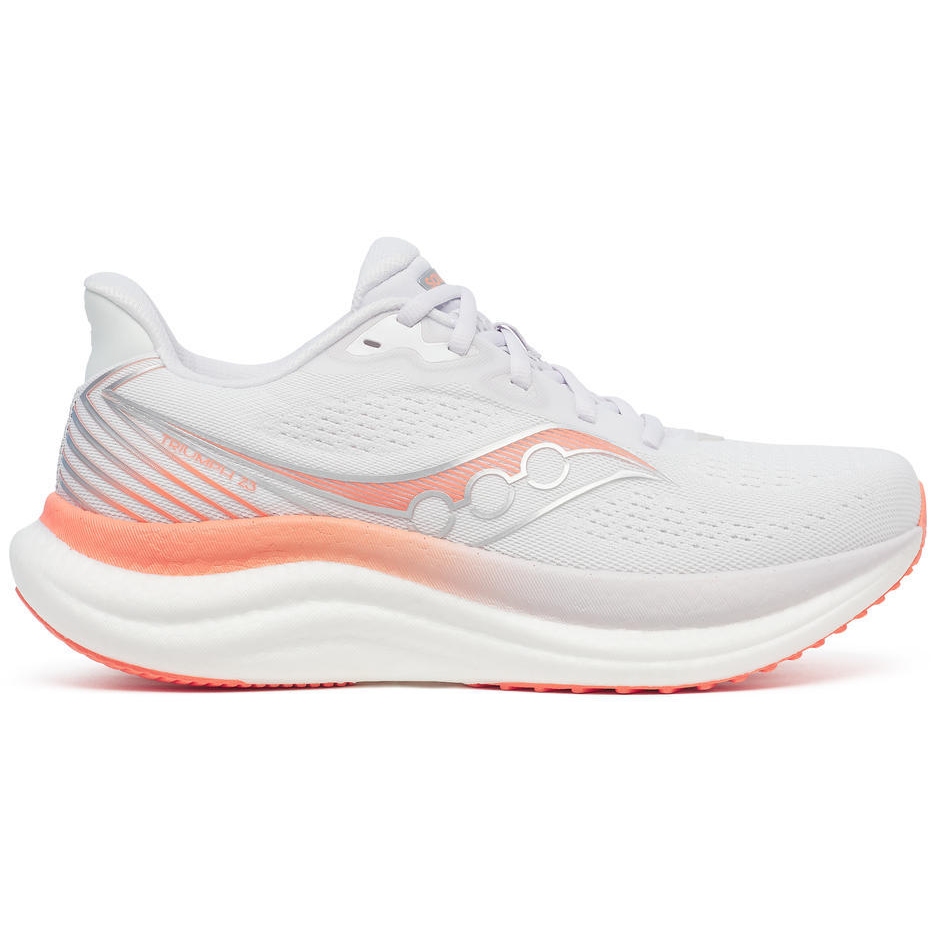
Saucony Triumph 23
The Saucony Triumph 23 offers a plush, well-cushioned ride suitable for daily training, featuring a significant weight reduction of 38g compared to its predecessor. With a stack height of 42.3mm in the heel, it provides ample cushioning, although the PWRRUN PB foam feels firmer than expected, lacking the explosive rebound found in some competitors. The shoe excels in stability, thanks to its wide heel platform and semi-gusseted tongue, making it secure for long runs. However, the tighter toebox may cause discomfort for runners with wider feet, and the shoe is not ideal for faster-paced workouts due to its lack of responsiveness. Breathability issues have also been noted, particularly in hot conditions, which may affect comfort over extended distances.

Saucony Xodus Ultra 3
The Saucony Xodus Ultra 3 is a max-cushion trail shoe designed for long-distance comfort on varied terrain. Weighing in at 312g, it feels noticeably heavier than its predecessor and less agile compared to lighter competitors. The PWRRUN PB midsole provides a bouncy underfoot feel, particularly at faster paces, while the PWRTRAC outsole offers decent grip, though it struggles in wet or muddy conditions. The fit is standard but may feel narrow in the toe box, potentially requiring a half size up for comfort during extended runs. Overall, this shoe excels in cushioning and protection for long efforts but may not suit those seeking agility or speed on technical trails.

Saucony Endorphin Pro 5
The Saucony Endorphin Pro 5 is a road running shoe that offers a max cushioning experience with a stack height of 39mm in the heel. It feels firm underfoot at slower paces, which may not appeal to all runners. The shoe is slightly heavier than other super shoes, weighing 215g, and has a less aggressive carbon plate designed for forefoot stability rather than explosive propulsion. Reviewers noted that the fit is standard, with a snug midfoot and roomier toe box, but the upper can be harsh, potentially causing friction during longer races. While it performs well for distances from 10K to half marathon, it may not replace the more elite-focused Endorphin Elite for competitive racing.

Saucony Ride 19
The Saucony Ride 19 is a road running shoe that features a max cushion level with a stack height of 38mm in the heel and 30mm in the forefoot. While it provides a firm underfoot feel at slower paces, reviewers note that the added weight and increased stiffness detract from the lively ride characteristic of its predecessors. This shoe feels bulkier and less nimble, making it less suitable for varied paces or speed work. The fit is standard, snug through the midfoot and roomier at the toes, but it lacks the versatility that many runners expect from the Ride line. Overall, it serves as a solid daily trainer but risks being overshadowed by more dynamic options in a crowded market.
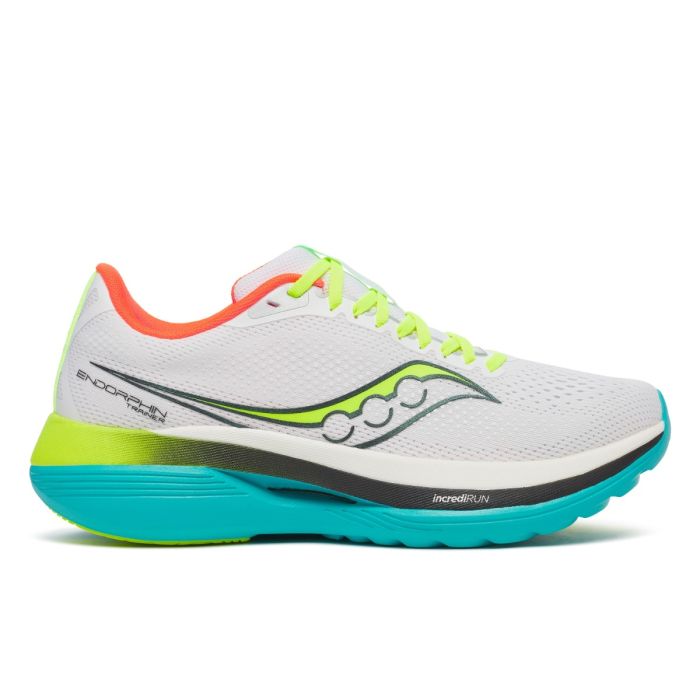
Saucony Endorphin Trainer
The Saucony Endorphin Trainer is designed for those seeking a maximum cushioning experience, featuring a stack height of 42mm in the heel and 34mm in the forefoot. It provides a stable ride with a firm PWRRUN bottom layer and a flexible carbon plate that enhances energy return, particularly noticeable at faster paces. However, the shoe's 285g weight can feel cumbersome during speed work, and the narrow fit may be uncomfortable for runners with wider feet. The contrasting softness of the upper and firmness of the midsole can create a clunky sensation, especially for longer runs. Overall, it excels as a long-distance trainer but may not suit those looking for a lightweight, speed-oriented shoe.